
Flying First Class Quietly Tips for Discreet Luxury Travel
- Rose Ann Clavel
- 5 hours ago
- 9 min read

First class is often imagined as a spectacle. Champagne photos, priority lanes, monogrammed luggage, and a performance of ease. The most refined version is much quieter.
Discreet luxury travel is about moving through the airport with less friction, resting well in the air, and arriving composed, without turning the experience into a public announcement. Seasoned travelers know that the real value of first class is not being seen. It is being spared the noise, delays, discomfort, and constant decisions that make long travel feel heavier than it needs to be.
Flying first class quietly takes a little planning. The right booking choices reduce attention. The right luggage keeps you efficient. The right lounge etiquette lets you enjoy the space without intruding on anyone else’s calm. Done well, first class becomes less about display and more about privacy, comfort, and control.

Think of discretion as part of the luxury
First class offers obvious comforts: larger seats, better dining, quieter cabins, faster airport handling, and more attentive service. The discreet traveler values those benefits without broadcasting them.
That means choosing calm over performance. It shows up in small ways. Boarding without holding up the aisle. Speaking softly to the crew. Keeping personal items contained. Dressing neatly but not theatrically. Skipping the cabin tour for social media. Treating the seat, lounge, and service as normal parts of travel rather than rare trophies.
There is a practical reason for this approach. A low profile makes the entire trip smoother. You attract fewer questions, invite fewer interruptions, and reduce the risk of unwanted attention around bags, documents, or personal routines. If you travel often, privacy becomes more valuable than novelty.
A discreet first-class passenger usually shares a few habits:
They know the airport layout before arriving.
They keep documents and devices easy to reach.
They use premium services without making a scene.
They interact warmly, but briefly.
They leave no trace of excess behind.
Quiet travel is not cold or aloof. It is considerate. It respects the shared space and the people working in it.
Book first class without creating a trail of attention
A discreet trip starts long before arrival at the airport. Booking choices affect who notices your plans, how many service interactions you need, and how smoothly the journey unfolds.
Choose practical flight times over glamorous ones
The most obvious first-class flight is not always the best one. Peak departure times usually mean crowded lounges, full premium cabins, busy boarding areas, and more competition for attention from staff.
For a lower profile, look for flights that support ease:
Midday departures when airport traffic is lighter
Red-eyes where rest matters more than social energy
Nonstop routes that reduce lounge and gate exposure
Flights with longer connection windows if a connection is unavoidable
The best itinerary is often the one that removes decisions. A nonstop flight in a strong first-class cabin usually beats a more elaborate routing that adds two lounges, a transfer, and extra chances for delay.
Use points and upgrades quietly
Award seats, upgrade certificates, and mileage redemptions can make first class feel more practical. They also help avoid the feeling that every detail must justify a high cash fare.
Be discreet with upgrades. Treat them as routine. If an upgrade clears at the gate, a simple thank-you is enough. There is no need to discuss fare classes, status levels, or how much value you extracted from the ticket within earshot of other passengers.
When working with agents, keep the conversation concise. Ask clear questions:
Is there a confirmed first-class seat available?
Can the seat be assigned now?
Are there lounge access details I should know before arrival?
Is there a private check-in area for this itinerary?
Specific questions get better answers and reduce back-and-forth.
Select seats with privacy in mind
Not all first-class seats feel equally private. The front row may board first and deplane quickly, but it may also have more foot traffic. Seats near galleys can be convenient, yet noisier. Solo suites or window seats usually provide the best balance of privacy and rest.
For discreet travel, think beyond legroom. Look for:
A window position away from the aisle
Storage that keeps belongings out of sight
A seat not directly beside the galley or lavatory
A layout that does not require stepping over another passenger
If traveling with someone, choose seats that allow quiet conversation without making the cabin part of it. If traveling alone, a more enclosed window seat makes it easier to read, sleep, work privately, or simply be left alone.

Pack as if you plan to disappear into the trip
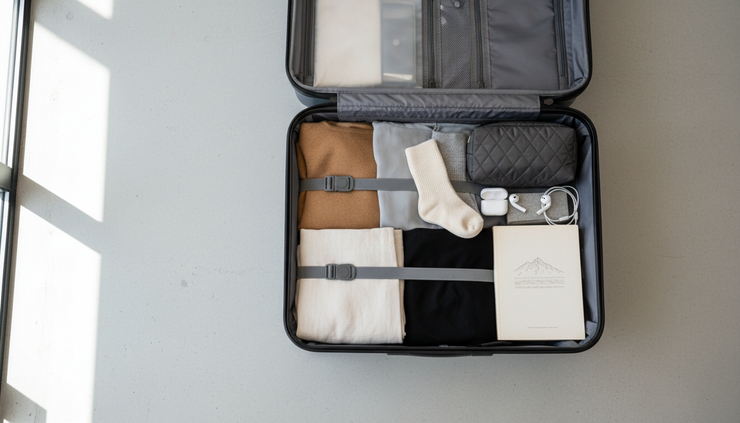
Packing for first class is different from packing to impress. The goal is to move easily, settle quickly, and keep every essential within reach without unpacking half your bag in the cabin.
A discreet packing system has three qualities: it is compact, organized, and quiet.
Choose luggage that does not announce itself
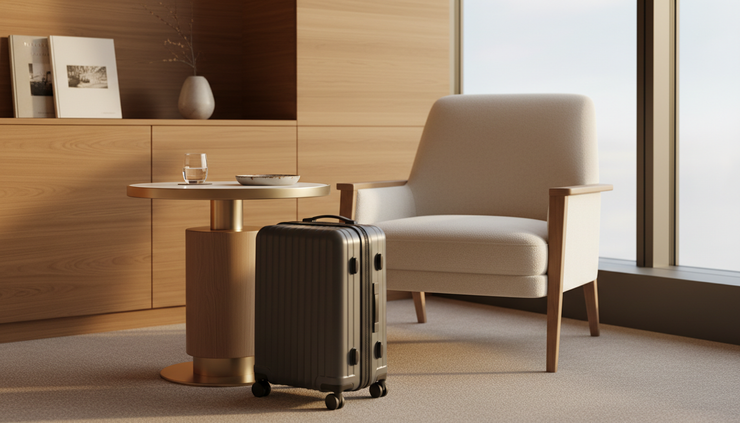
Luxury does not require loud luggage. Recognizable designer patterns can draw attention in premium cabins, lounges, hotel lobbies, and rideshare pickup zones. A well-made carry-on in a muted color often serves better.
Good discreet luggage tends to have:
Smooth, quiet wheels
A sturdy handle that does not rattle
Minimal exterior markings
A shape that fits overhead bins without negotiation
A personal item that slides neatly under the seat
Avoid overpacking. A swollen bag slows boarding and makes you more visible. The elegant move is to lift your bag once, place it cleanly, and sit down.
Build a small in-flight kit
First class supplies many comforts, but personal essentials still matter. Keep them in a small pouch that can be removed before takeoff. This prevents rummaging through the overhead bin and disturbing the aisle.
Include a few carefully chosen items:
Noise-canceling earbuds or compact headphones
A soft eye mask
Lip balm and moisturizer in travel sizes
A charging cable and compact power adapter
Any needed medication in original packaging
A pen for forms where needed
A thin pair of socks for longer flights
If you use fragrance, apply it lightly before leaving home or skip it altogether. Aircraft cabins are enclosed spaces. A strong scent travels farther than intended and can make the experience less pleasant for others.
Dress for comfort without costume
Discreet first-class style is polished but relaxed. It does not need to signal wealth. It should help you pass through security, sit for hours, sleep, and arrive looking composed.
A simple formula works well:
Soft layers in neutral colors
Slip-on or easy-off shoes
A light scarf or wrap
Minimal jewelry
Clean, structured basics
Useful when cabin temperatures shift
Practical for security and long flights
Doubles as warmth without bulk
Reduces delays and unwanted attention
Comfortable without looking careless
Avoid clothing that needs constant adjusting. Avoid noisy fabrics, excessive hardware, or pieces that make security screening more complicated. The best travel outfit lets everyone, including you, forget about it.
Use the lounge without treating it as a stage
First-class lounges can be the best part of premium travel. They offer quiet seating, showers, dining, drinks, work areas, and staff who can help with flight issues. They also reveal a great deal about a traveler’s manners.
The most discreet lounge guests treat the space as a shared refuge. They enjoy the benefits without claiming more than their share of attention.
Check in with calm confidence
Have your boarding pass and identification ready before reaching the lounge desk. If access rules are unclear, ask politely and accept the answer without debate in front of other guests. Lounge agents often have little flexibility and a long line of travelers waiting.
If the lounge is busy, ask one quiet question that matters most:
“Is there a quieter area available today?”
That is usually enough. Staff may point you toward a library room, rest area, dining section, or shower suite depending on the lounge.
Keep calls and videos private
Nothing breaks the mood of a premium lounge faster than a speakerphone call. Use headphones for calls, videos, voice notes, and music. If you need to discuss personal or business details, do it in a phone booth, an empty corridor, or a low voice away from others.
Even quiet travelers can forget how easily voices carry in lounge seating areas. Assume nearby guests can hear every word.
Be measured with food and drink
Part of the pleasure of a first-class lounge is proper food before a flight. Enjoy it. Just avoid treating the buffet, bar, or dining room as an event that needs commentary.
Good lounge etiquette is simple:
Take modest portions and return if needed.
Keep bags out of walking paths.
Do not save multiple seats in a crowded room.
Tip where tipping is customary and staff provide direct service.
Leave tables tidy enough that staff can reset them quickly.
If alcohol is available, pace yourself. A discreet first-class passenger boards composed. Crew members notice signs of overindulgence, and so do other passengers.
Use shower suites and quiet rooms thoughtfully
Shower suites can transform a long connection. Quiet rooms can make an overnight itinerary much easier. Use both with awareness. Set a timer if the lounge is busy. Gather belongings before your slot. Leave the space in good condition.
Small courtesies make premium spaces work for everyone.
Board first class without drawing the cabin’s attention
Priority boarding is useful because it gives you time. It does not require urgency or ceremony.
Arrive at the gate early enough to hear announcements, but avoid crowding the boarding lane. When first class is called, board smoothly. Keep your boarding pass ready, greet the crew, find your seat, and step out of the aisle as soon as possible.
Once onboard, the discreet routine is efficient:
Place your larger bag overhead.
Remove your in-flight pouch before sitting.
Put your phone, passport, and wallet in a secure spot.
Settle outerwear without blocking the aisle.
Accept or decline pre-departure service with a quiet thank-you.
If the crew addresses you by name, respond naturally. There is no need to amplify the moment. If something is wrong with the seat or service, mention it privately and politely. Most issues are solved faster when they are handled with calm restraint.
During the flight, good privacy habits matter:
Keep screens angled away when viewing personal material.
Use headphones at a low volume.
Avoid photographing other passengers or crew.
Ask before raising or lowering shared dividers.
Keep lavatory and aisle movements minimal during meal service.
First class gives you space. It does not remove the need to share that space gracefully.
Enjoy the benefits without narrating them
The quietest way to enjoy first class is to let the experience do its job. Eat well if you are hungry. Sleep if you need rest. Work if the cabin supports focus. Watch a film. Read. Look out the window. Arrive better than you would have in a more crowded cabin.
The benefits are real, even when no one else knows about them:
Better rest on long flights, especially with lie-flat seating
Less airport friction through priority check-in, boarding, and baggage handling
More personal space for reading, dining, sleeping, or working quietly
Better problem resolution when delays or missed connections happen
A calmer arrival because fewer small discomforts pile up along the way
Discretion also protects the pleasure of the trip. When luxury becomes content, it invites comparison. When it stays private, it remains personal.
Photos are not forbidden, but restraint matters. If you want a memory, take one clean image of your seat, meal, or window view without including other passengers. Skip flash. Avoid filming crew members. Never photograph documents, bag tags, or anything with personal details.
Handle arrivals with the same restraint
The last impression matters. First-class travelers often deplane first, which can create a rush at the aircraft door. Move promptly, but do not push. Thank the crew. Collect your belongings fully before stepping into the aisle.
At baggage claim, keep the same low profile. Priority tags do not guarantee instant delivery, and hovering at the belt rarely helps. Stand back, watch carefully, and move in only when your bag appears.
If a chauffeur, hotel car, or premium transfer is waiting, confirm your name or reservation quietly. Avoid announcing room numbers, destinations, or plans where others can hear. Privacy should continue beyond the jet bridge.
This is where discreet travel pays off most. You leave the airport rested, organized, and unruffled. No drama. No performance. No unnecessary trace.
The quiet art of arriving well
Flying first class quietly is a skill built from small choices. Book the route that reduces friction. Choose seats that protect privacy. Pack so you can settle in seconds. Use the lounge with care. Board calmly, speak softly, and let the service support the trip instead of becoming the story.
The most sophisticated luxury travel rarely looks dramatic from the outside. It looks simple. A calm traveler, a well-packed bag, a quiet lounge chair, a smooth boarding process, and an arrival that feels easier than expected.
That is the point of first class at its best. Not to be noticed, but to travel well.


Comments